Just two weeks ago I was visiting London for a couple of days. From Amsterdam it is easy to do by train, really a delightful trip. It was a bit cold, but what can you expect in November. Drizzly rain made way for a shy watery sun, and all came with a rather cold wind. We’ve been visiting Christmas markets around Europe for a while now, and this year would be no exception. Mulled wine and sweets it would be again.
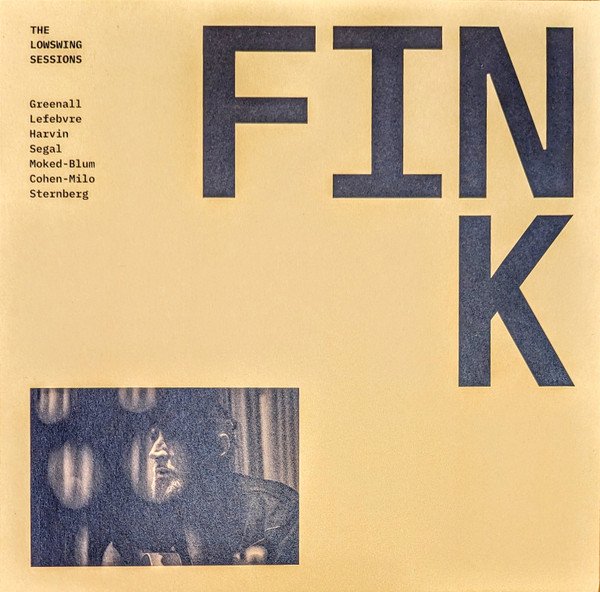
I also took the time to visit the record store of HMV in Oxford Street. I heard about this new live record of Fink, and I wanted to have it. My neighbouring store didn’t have it, so maybe? I wasn’t disappointed. I had to drag it through the city all day, while we were also looking for family presents in the ever present souvenir shops around China town.
The gatefold packages two records full of live recordings from between 2014 and 2017. Not the latest, but it is like it picked up where part one ended: in 2012. From the pictures it seems the band rather likes my country: out of 29 pictures in the booklet 20 were taken at concerts in festivals and concerts in the Netherlands. That booklet also has a short article written by the drummer. He writes that the band was growing up during this time. During the recordings of the previous live album in 2012 they were still adjusting to the touring, being surprised at the luxurious venues and overfilled fridges. This album shows them having to make the sound bigger, for huge audiences. It is that difference that characterises this album.
Part one was intimate and looking for sound perfection. Here the sound is clearly bigger, but also less perfect. I think the earlier album is clearly the better of the two. Singer Fin Greenall writes in the same booklet that he was looking for perfection in the beginning. Every note had to be right. It stymied passion and emotion. It is in the imperfection that beauty lies.
This was the last record of my current collection. It means I cannot write daily anymore. I will keep this up, but less frequent. When I buy new records, I will add them here. I’ve reached my goal: listening to every record in my collection, and then write a short piece about it. That journey ends here.
I learnt a lot doing this: I’ve learnt my own personal history is reflected in my musical choices. While writing this I’ve revisited my life. There is an amazing story to tell from every choice, but what is more personal that what we listen to? Even the fact that some records were never my choices to begin with, says something about me. In 1706 days I hope I’ve shown you myself. And the rest is future.
This live album is a release from 2022, together with a 40 minute movie on Netflix (not in the Netherlands, alas) about the concert. The recordings themselves had taken place on the date advertised on the cover, finding John Fogerty’s band at the height of their power. The British competitors had split up, leaving the swamp rockers the biggest group on the planet.
Or so says voiceover Jeff Bridges in the movie. But is that likely? This was also the era of the Rolling Stones, Santana, Led Zep and the end of Simon & Garfunkel. Was CCR better than those big names? Sales numbers from the time are sketchy, and limited to the US anyway. And how do we measure success anyway?
What is certain is that Creedence had a short period of incredible success. In just four years they made seven studio albums, three of which were in the top ten in 1970. In 1970 they had no less than ten hit singles on Billboard. That year’s Cosmo’s Factory stayed at number 1 of the Billboard 200 for a staggering 9 weeks. It was hard to get around the screaming voice of Fogerty if you didn’t like it! It is that kind of density of output that is unprecedented. Even the most successful bands take decades to reach that level.
Without better proof, saying they were the biggest is a little pretentious. Of course, it does sell the movie, especially if you compare them to the ever present Beatles.
I’ve written a couple of times about the MoFi records, but never about the controversy they were in. In 2022 it was discovered that for years Mobile Fidelity was selling records with the claim that they were taken directly from the analogue tapes. For vinyl purists that is a thing. I’m not discussing here if you can hear the difference: there are trolls enough debating that. However, if you claim it, it should at least be true, right? Especially given the prices of these records.
And it turned out not to be true for many records. The reason for this is that most record companies are not willing to send the original tape to just anyone who wants to make a new mastering, even if they own the rights. Those tapes are a huge affair: they are heavy and brittle, and not to mention unique. Transporting them is like transporting an original Van Gogh to a studio for a new photograph (and then someone tells me that is done all the time…).
So for convenience, record companies send them digitally, using the highest available format: DSD 256. That format consumes about 10Gb per hour for just music. This not so analogue file was then remastered and analoguely (new word) put to the stamper. For never telling the public about that digital step, they had to reimburse all their US customers following the class action suit that was filed. End result: 25M $.
And what it does not mean is that all record companies that claim analogueness (another!) are not to be trusted. Blue Note has more than once proven its track record (hehe) and even supplied proof of the use of the original tapes. Like for this one. It happens that the tape of the recording, from 1957, is in excellent condition. So this time the hype sticker is actually correct.

Two old time giants of the tenor saxophone play the classics of jazz. Coleman Hawkins is seen as the father of the tenor saxophone, but his trail was followed closely by Ben Webster. The album came out in 1957, at the height of their powers. upon hearing it, I was amazed with this recording. I am used to the complexities of Coltrane, and in comparison this is much smoother. It is nice jazz for late in the evening.
I’d like to have more of these records, so this will not be the last. This is a new release, presented in a beautiful gatefold on the Verve label. Interestingly, the two have one thing in common (apart from their instrument): they both played and toured for some years in Europe. The Hawk in the 30s, and also in the Netherlands, Webster in the 60s. In fact, Webster died in Amsterdam after he played at a concert in nearby Leyden, in 1973. He stipulated that after his death nobody was allowed to play his saxophone.
Grant Green plays jazz guitar, and in bebop there are not many of those. Idle moments is a record he made in 1963, released in 1965. When he started with Blue Note, he was nervous and not very sure of himself. The result from 1961 was only released in 2001 as First session. Looking at the list of musicians he is supposed to lead, I can imagine his fear: Wynton Kelly on piano, Paul Chambers on bass and Philly Joe Jones on drums. Not exactly regular Joes.
For this record he recorded pianist Pearson’s Idle moments. The song should have taken under ten minutes, but due to confusion about the length of the chorus due to a repeating melody, it was taking way longer. Blue Note’s producer Alfred Lion tried to record a shorter take, but the longer version just felt better. The length of that song caused two other songs to be shorter than was originally intended though. The originals are added in the CD version (and here in the Spotify link) as alternate takes.
The debut album of singer-songwriter Jewel, from 1995. The album also contains the first (and only) hit single by the singer, Foolish games. That song was an enormous hit two years later, when it was released in the soundtrack of the movie Batman & Robin. The album followed suit, and is now one of the most successful debut albums ever. Yay for marketing.
Both lyrics and the voice sound like we’re hearing the drama of a teenager in high school. Yet the lyrics are clever and strong. When it came out, I got the single version on CD (oh wow, a CD single!), but I never bought the album. I knew the album, but I didn’t like the version of the song I liked so much. It took a while for me to get used to the album itself, and last month I was it lying in the store. It was released in commemoration of its 30th anniversary, including five extra songs.
I have adjusted my opinion after hearing this album again. Yes, it still has that high school vibe, but it also contains some incredible fragile and beautiful songs.
The Baroque fugue was an important art form in music. Mastering the fugue meant the ultimate test as a composer. It is both an exercise in mathematics and art. These pieces had a central theme, short and often flexible. This theme was then examined, turned and twisted in variations, and put against opposing themes. All of this followed strict compositional guidelines. Bach was the absolute master in the fugue.
On this record is an ensemble version for six players, of fugues by Bach. The title implies this is his enormous werk of that title (The art of the fugue), but it is not. It contains arranged fragments, ordered in sets of similar fugues.
I got this as a present from a friend. He was it on the street. It might have been left there by one of the musicians on the album, because it was not alone: with it were ten others of the same album. Probably copies given to the artists for promotion. Or maybe the album didn’t sell and they got what was left. Or maybe both, who knows.
The acoustic version of Fink’s latest album, released this year. Ever since I heard Wheels turn beneath your feet I’ve been looking for that same sound. Bloom innocent had it, but I missed it when it was sold in stores. It is on my wishlist, but goes for way too much right now. I had hoped this one would be good, because the studio version of this album is amazing. Alas, it does not deliver on its promise.
Since this album is labeled as acoustic, I’ll take some time to investigate what that term means. As you might have found out in reading this blog, I listen mostly to classical music. So for me acoustic means strictly no electronics and no artificial amplification. That is not what it means in pop music. So what does it mean?
The term originated in the 60s, when artists like Bob Dylan used guitars that were not electric and were using a sound chamber to amplify the sound before it reached the microphone. A classic guitar is a good example. The instrument is amplified using a microphone in front. Electric meant using a piezo element in the guitar to pick up the sound directly from the string. There is no sound chamber used, and the guitar itself barely makes a sound when plucked without being connected to its amplifier.
In the 70s and 80s, with the advent of synth-pop, acoustic referred to a stripped down version, using less synths and effects. It was still using electrics though. That is still its meaning, though nuances between different styles exist. In the 90s this definition made it to main stream by the acoustic series of MTV Unplugged. I guess this is what Fink meant to do on this album.
This is not only Pink Floyd’s most famous album, but close to the best known and best selling (album) record of all time. Also, it is a concept album about the pressures of modern life, and it sounds surprisingly modern. It also carries the famous design by Hipgnosis, a design that is closely connected to the musical concept of the album itself.
An example of this integrated vision is in the beams that come from the prism. The album is a gatefold, and on the inside the coloured beams go on. The green part follows the shape of a heartbeat though. The heartbeat can be found throughout the album. It starts with it, is heard several times during the intermissions and fades out with it. It is referring to how all the themes take place surrounding a human life.
It is generally accepted that this is also the band’s reaction to the mental collapse of former band leader Syd Barrett. Already an unstable mind, his substance use didn’t do him good in the 60s, leading to him having to leave the band in 1968. Many of the band’s songs have dealt with the matter. The sight of someone so close to you deteriorating, breaking down, while it should be the time of beginning in life.
There is a theory that if you listen to the album while watching The wizard of Oz, you’ll see remarkable synchronicity. Singer David Gilmour denied the connection, but can anybody take the test?
Cellist Yo-Yo Ma has done about everything imaginable in music. He uses the cello in arranged versions of music you don’t expect. To give myself some ideas I’m listening to some of them right now, like his album with Appalachian bluegrass music. It is interesting to hear him fit in the role of the cello in there. He does the same here. I am impressed with the man himself, I am impressed with his musical skills, but I’m not very convinced this crossover thing is working. Ma also works with an ensemble of his own making, called the Silk Road Ensemble. It is the same story there: disappointing and unimaginative arrangements of well known works.
Yet much to my surprise this record is the exception. Maybe it is because I don’t know most of the melodies, but they sound quite good under Yo-Yo Ma’s talented bowing. He plays here with an ensemble called Pro Musica Nipponia that is surprisingly good and inspired. Buying this record was a bit of a gamble, but it clearly paid off.