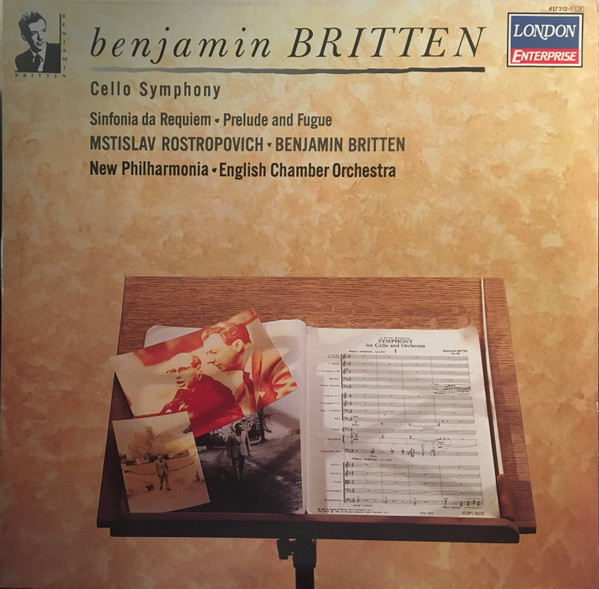
Britten’s cello symphony was composed in 1964, for Rostropovich. This is the first recording, but not the premiere. Britten called it a symphony, because he wanted to make his intention clear to put the cello in the score as an equal. In a concerto it would be cello, accompanied by the orchestra. Here the two work together.
For cellists it is a demanding piece, played in the highest registers of the instrument, and with sudden dynamic contrasts. It makes for an exciting piece, especially the third part, the Adagio.
The Sinfonia da requiem was commissioned by the Japanese government in 1939, to accompany their celebration of the 2600th anniversary of the Empire. Britten was a committed pacifist, and Japan was already at war since 1937. So he wrote a tasteful (or so he thought) piece full of Christian values and mourning about the victims of war: a requiem. Instead of a cheerful marching tune Japan got a funeral piece.
Japan rejected it furiously. It led to a minor diplomatic incident, with the UK begging Britten to change it, and Britten denying the request. Some years later, after Pearl Harbor, they would be at war and the incident was forgotten. By that time the requiem had already had its premiere, by the New York Phil conducted by John Barbirolli.