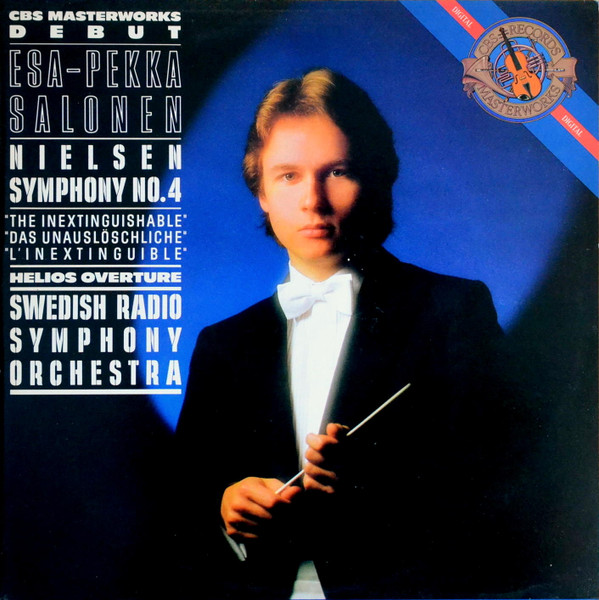
The Danish composer Carl Nielsen lived and composed around the end of the 19th and the first half of the 20th century. On this record is the most popular of his six symphonies, composed during the first World War. It is called Inextinguishable because according to the composer it signifies the life force, the unquenchable will to live. In a particular dramatic moment, it has two sets of timpani on both sides of the stage, competing with each other.
The companion piece on this record, Helios, is a showpiece for orchestra. It was composed in 1903, when Nielsen was visiting Greece. The hot vistas of the Aegean inspired him to create an ode to the sun. This time in the composer’s life was later called his psychological period, when he had very dramatic rows with his wife. Anne Marie Brodersen was a sculptor and striving for a life independent of her husband. It led to a strained marriage, with her going away for months on end, and him philandering with other women. It didn’t stop her from creating an equestrian statue in a park in Copenhagen after his death.